Industrial Networking
Plant-floor networks engineered for noise, uptime, and security.
Detail sheet
How we build it
Every deployment is documented to the last terminal, so your team can own it the day we hand it over.
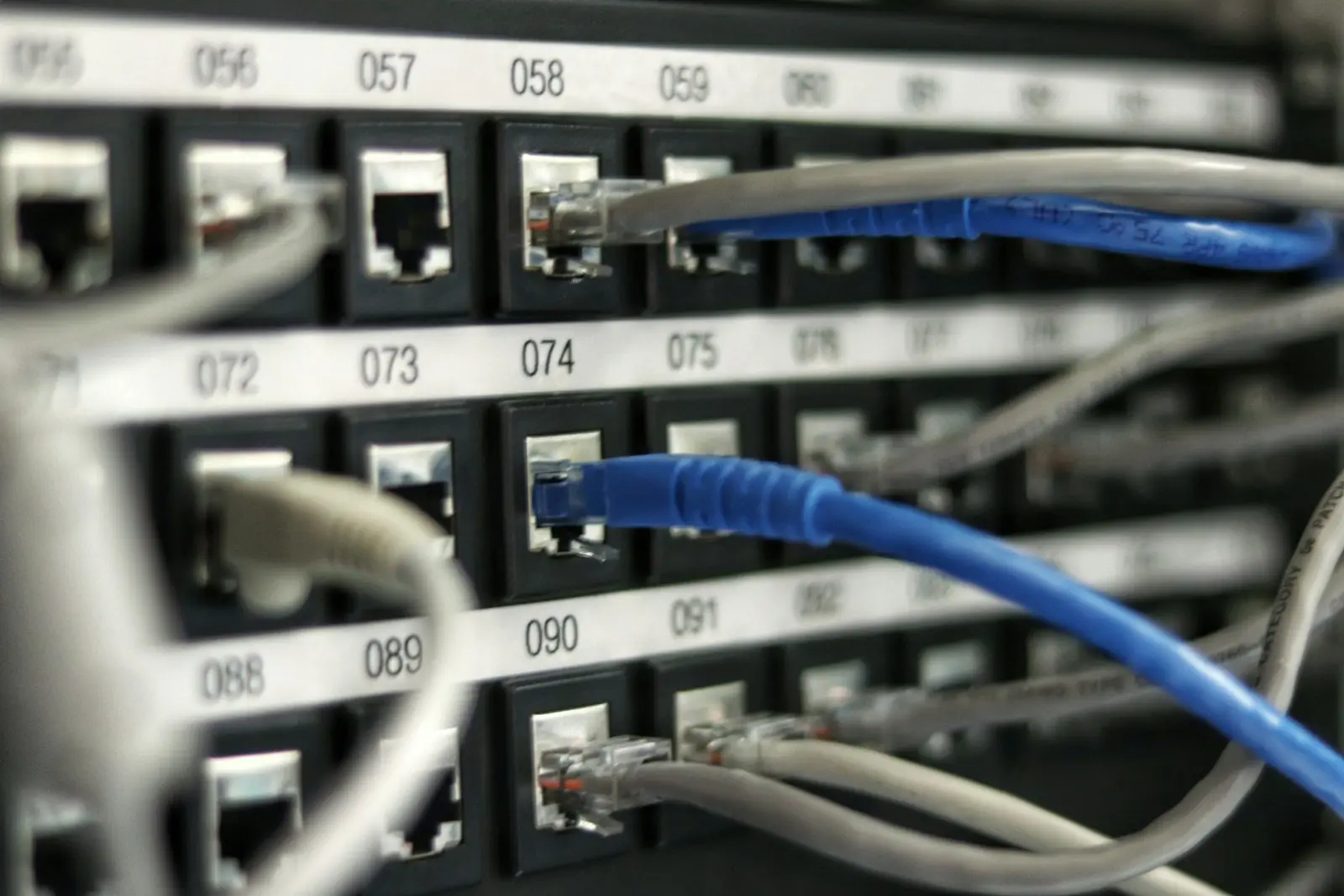
Office networking assumptions break on a shop floor. We build industrial networks that tolerate electrical noise, survive a switch failure without stopping production, and keep OT traffic properly separated from IT. Ring topologies, managed industrial switches, and documented address plans.
- Topology
- Managed ring with fast recovery
- Protocols
- PROFINET, EtherNet/IP, Modbus TCP
- Security
- OT/IT segmentation & firewalling
In detail
What you should know
How this building block behaves in a working plant, and where it fits.
Office assumptions break here
A plant floor has electrical noise, temperature swings, vibration and cable runs that pass close to drives. Office switches in a control panel fail in ways that look like intermittent software faults, which is why they can take months to diagnose.
Industrial switches, properly rated cable and correct shielding practice remove a category of problem that is otherwise very expensive to chase.
Designing for a failed switch
A ring topology with fast recovery means a single failed switch or cut cable costs you a brief interruption rather than a stopped line. On a flat linear network, the same fault stops everything downstream of it.
We also plan the address scheme and document it. Networks that grow without a plan end up with duplicate addresses that surface at the worst moment.
Keeping OT and IT apart
Control traffic and office traffic should not share a broadcast domain. Segmentation protects production from an IT problem and gives your IT team a clear boundary they can secure and audit.
This is also what makes cloud connectivity safe to add later, because there is a defined place for the gateway to sit.
Applied
Where it earns its place
- Intermittent faults that look like software but track to cabling or noise
- A flat network where one failure stops everything downstream
- Plant equipment sharing a network with office traffic
- Preparing a site for cloud connectivity without exposing controllers
What ships with it
- Network topology and address plan
- Managed industrial switches configured for fast recovery
- Documented OT/IT segmentation
- Cable schedule and labelling
- Test records and handover documentation
Common questions
- Can we use our existing office switches?
- In a panel, generally no. Temperature, vibration and noise cause intermittent failures that are very hard to diagnose and usually cost more than the switches saved.
- Which protocol should we standardise on?
- Usually whichever your controllers speak natively — PROFINET, EtherNet/IP or Modbus TCP. Mixing protocols is manageable but adds gateways and failure points.
- Does segmentation stop us reaching the data?
- No. It defines where the data crosses, which is what makes crossing it safe. The gateway sits at that boundary and connects outward only.
Elsewhere in the stack
Other solutions
The layers above and below this one — most projects use three or four together.