Material Handling & Logistics
Conveying, sortation and warehouse automation controlled as one system.
- Scope
- Ground to Cloud
- Approach
- Retrofit first
- Base
- Bangalore, India
The brief
What this sector asks of a control system
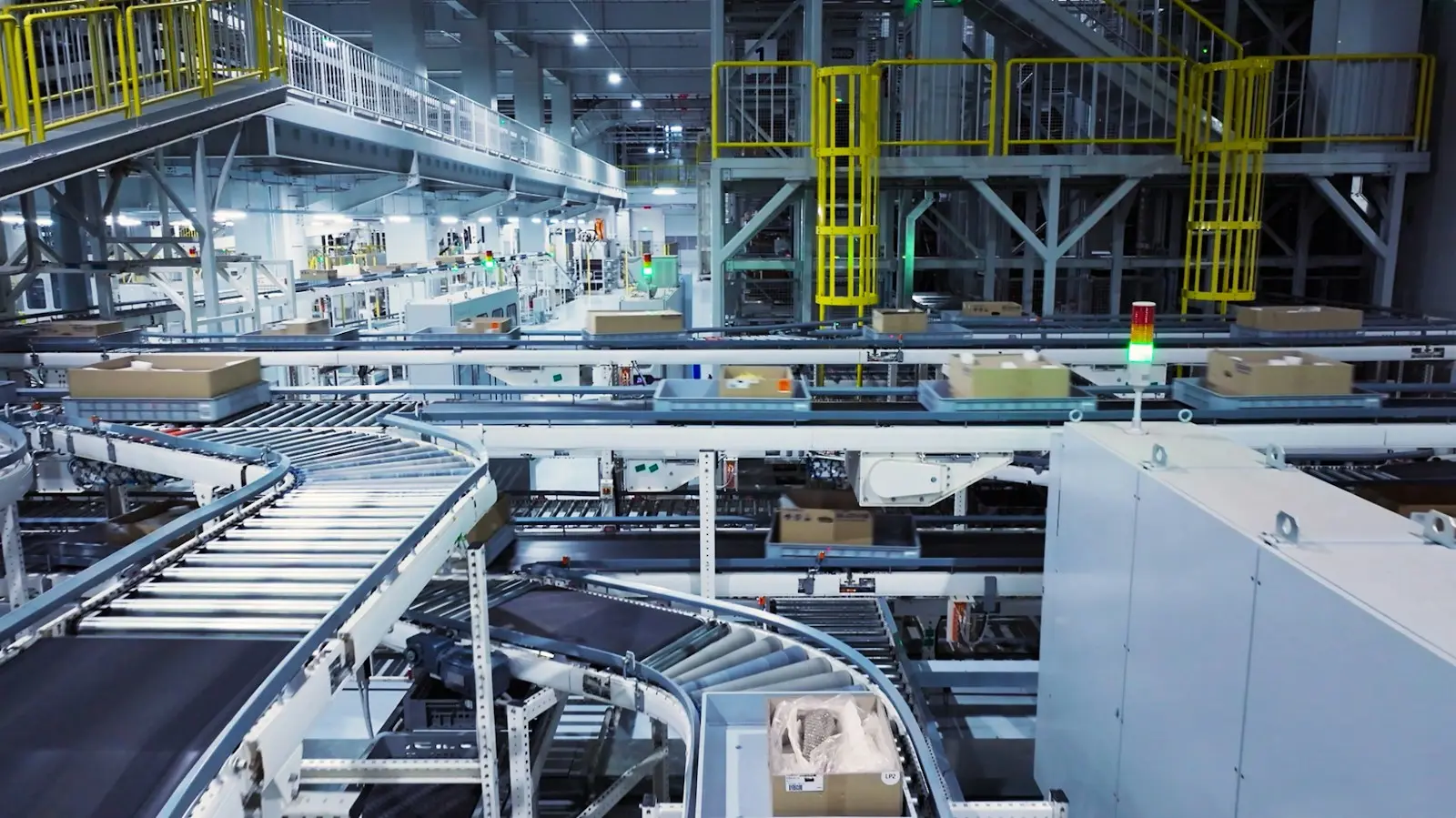
Warehouses and distribution centres fail at their transitions — between conveyor zones, between automation and people, between the control system and the WMS. We engineer conveying, sortation and storage control with those handshakes designed rather than improvised, so throughput holds up when the volume arrives.
Every engagement starts the same way: we walk the floor, read the existing drawings, and write down what is actually installed before anyone proposes a platform. The sector decides the priorities — the plant decides the design.
Constraints we engineer around
What we bring
Disciplines we lead with in material handling & logistics
The same engineering team carries the work from the panel to the dashboard, so nothing is lost at a handover between vendors.
In detail
What shapes the work here
The constraints that decide how a system for this sector gets engineered.
Throughput is decided at the merges
Straight conveyor is easy. The rate a facility actually achieves is set at merges, diverts and induction points, where control decides which unit goes first and how far back the decision propagates.
We model those points before commissioning, because a merge that stalls under load cannot be fixed with a faster motor.
Recovery without a full restart
Jams are routine, not exceptional. The measure of a good system is how much of it keeps running while one zone is cleared, and how little operator judgement is needed to bring that zone back.
Zone-level recovery is designed in from the start. Systems that require a global reset teach staff to clear faults by restarting everything, which is where the real downtime accumulates.
The handshake with the WMS
Most integration pain here is not protocol, it is ownership: which system decides a destination, which one holds the truth when they disagree, and what happens to a unit whose instruction never arrived.
We agree those rules in writing before building, and design an explicit exception route, because units without instructions are the ones that end up in a corner of the warehouse.
Typical scope
What we are brought in to do
- Conveyor, sorter and diverter control across zones
- Barcode and scanner induction with exception handling
- AS/RS and shuttle system integration
- WCS-to-WMS interfacing with defined ownership rules
- Throughput, dwell and jam reporting by zone
Engineering constraints
- Peak load
- Designed at merges, not average rate
- Recovery
- Zone-level, no global restart
- Integration
- Ownership agreed before build
Common questions
- Can you integrate with our existing WMS?
- Yes, and the work is mostly in agreeing the rules rather than the interface. We ask early which system wins when the two disagree.
- Will it hold our peak-season rate?
- We size against your peak, not your average, and we tell you which merge is the limiting point. That is usually the honest answer about a facility's ceiling.
- Can we phase this in without stopping despatch?
- Normally yes, by zone, with the existing flow running beside the new one. It takes longer than a shutdown cutover and is usually worth it.
Elsewhere