Machine Building (OEMs)
Control engineering for machine builders — repeatable, documented, ready to ship.
- Scope
- Ground to Cloud
- Approach
- Retrofit first
- Base
- Bangalore, India
The brief
What this sector asks of a control system
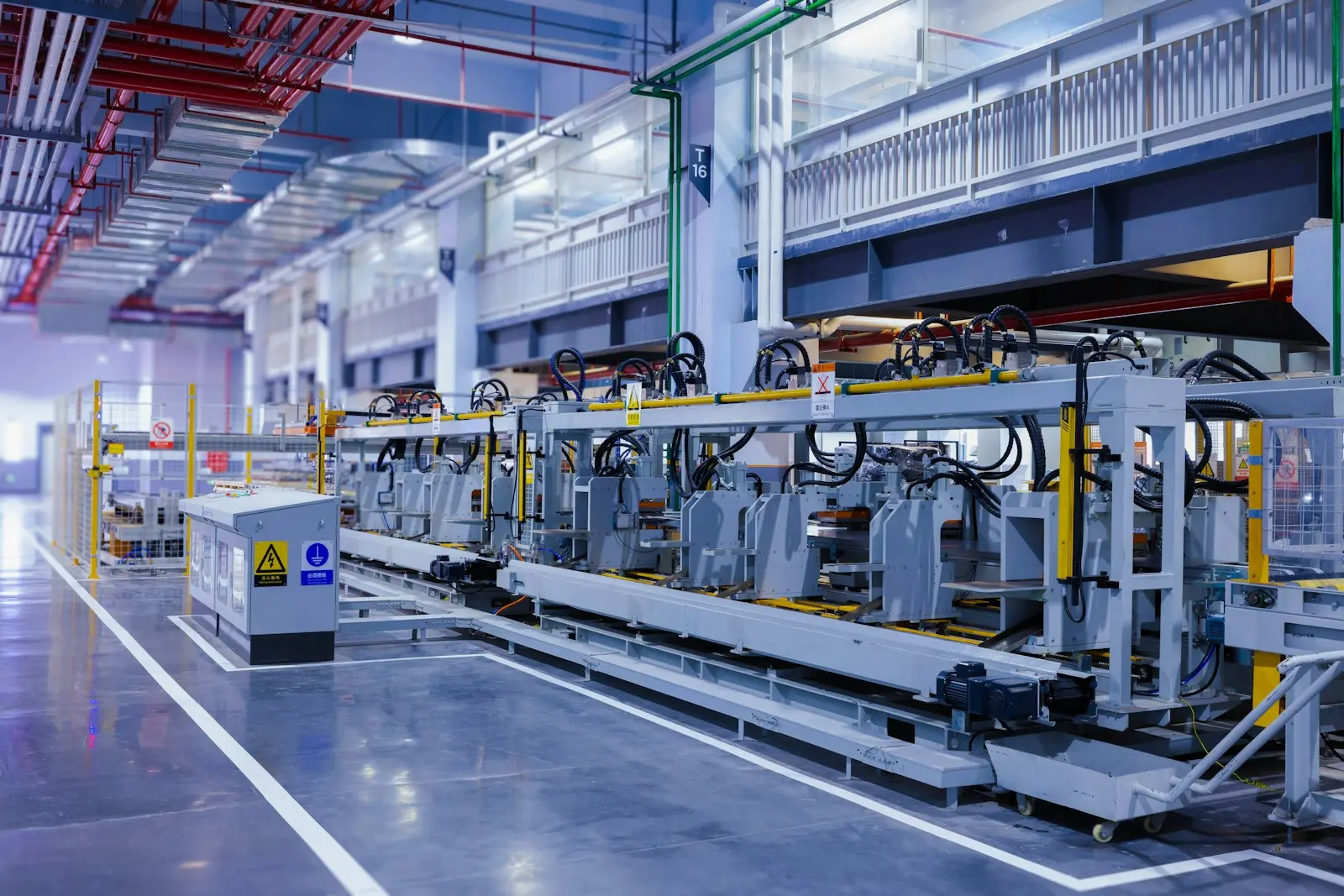
For an OEM the control system ships with the product and is supported for its life. We act as the control engineering arm for machine builders: a standard architecture across a range, options handled as configuration rather than as forks, and documentation that lets your service team support the field without calling the original programmer.
Every engagement starts the same way: we walk the floor, read the existing drawings, and write down what is actually installed before anyone proposes a platform. The sector decides the priorities — the plant decides the design.
Constraints we engineer around
What we bring
Disciplines we lead with in machine building (oems)
The same engineering team carries the work from the panel to the dashboard, so nothing is lost at a handover between vendors.
In detail
What shapes the work here
The constraints that decide how a system for this sector gets engineered.
One architecture across the range
Machines developed one at a time accumulate a different control approach per model, and the support burden grows with the catalogue. A shared architecture with model-specific configuration keeps that flat.
It also shortens the next machine considerably, which is where the investment repays itself.
Options as data, not as branches
Every customer asks for something. When options are handled by copying and editing a program, the tenth machine is unmaintainable and no two are truly alike.
Configurable option handling keeps one code base across the range, so a fix made once applies to every machine that ships afterwards.
Supportable by your service team
The people diagnosing a fault will be your service engineers, often by phone, often across a time zone. Diagnostics, clear fault messages and structured documentation are what make that call short.
We write for that reader, because a machine that only its programmer can debug is a warranty liability.
Typical scope
What we are brought in to do
- Standard control architecture across a machine range
- Configurable option and variant handling
- HMI and diagnostics designed for the end customer
- Remote access and support tooling for field service
- Documentation packs shipped with each machine
Engineering constraints
- Repeatability
- One architecture, configured per model
- Options
- Data-driven, single code base
- Support
- Written for your service engineer
Common questions
- Do we own the control software?
- Yes. The source, the documentation and the right to modify it are yours — you are shipping it to your customers, so any other arrangement would be untenable.
- Can you work to our customers' platform requirements?
- Yes. OEM customers frequently specify a controller brand, and a well-structured architecture ports between platforms with far less pain than an ad-hoc one.
- Can you support us during commissioning at end-customer sites?
- Yes, either directly or by preparing your engineers to do it. Most OEMs prefer the second after the first few machines.
Elsewhere