Textiles
Machine retrofits and energy optimisation for high-volume mills.
- Scope
- Ground to Cloud
- Approach
- Retrofit first
- Base
- Bangalore, India
The brief
What this sector asks of a control system
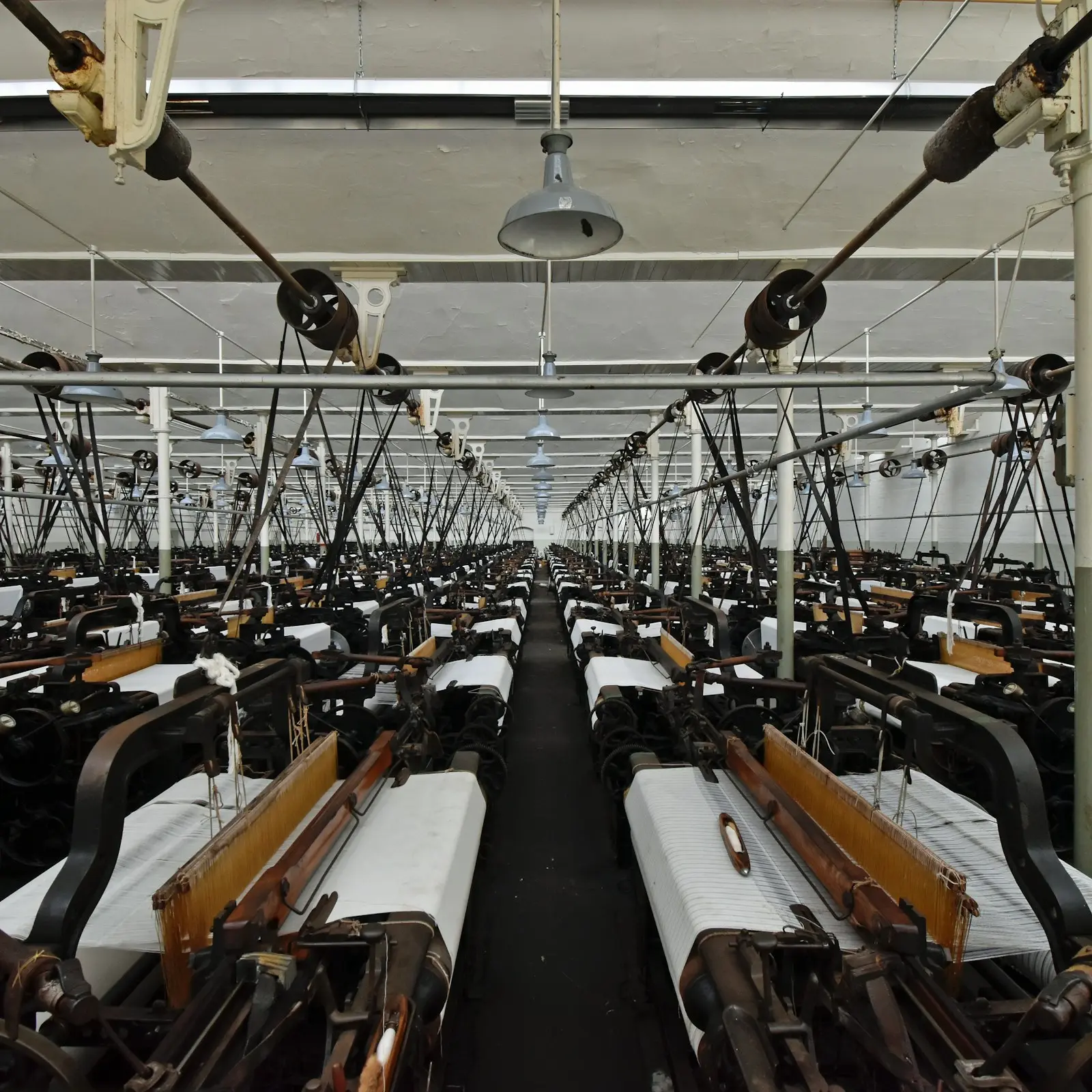
Mills often run capable machines held back by obsolete controls. Retrofitting the control layer is far cheaper than replacing the machine, and it unlocks production data the original equipment never exposed — plus energy sub-metering that usually pays for the project on its own.
Every engagement starts the same way: we walk the floor, read the existing drawings, and write down what is actually installed before anyone proposes a platform. The sector decides the priorities — the plant decides the design.
Constraints we engineer around
What we bring
Disciplines we lead with in textiles
The same engineering team carries the work from the panel to the dashboard, so nothing is lost at a handover between vendors.
In detail
What shapes the work here
The constraints that decide how a system for this sector gets engineered.
Good machines, dead controls
Mills are full of mechanically sound machines running on controllers nobody can source parts for. The machine has years left; the electronics decide its life. That is an unusually good case for retrofit, because the expensive part is already paid for.
Replacing the control layer typically costs a fraction of new equipment and returns the machine to a supportable platform with spares your maintenance team can actually buy.
Data the machine never offered
A retrofit is also the cheapest moment to add visibility. Original equipment often reported nothing — no count, no stoppage reason, no efficiency. The new control layer can expose all of it because the sensors and wiring are being touched anyway.
Doing it later means a second intervention on the same machine, at a second cost, for data that could have come free with the first.
Energy is the margin
Textile production is energy-intensive, and in most mills consumption is measured at the incomer and nowhere else. Sub-metering per machine or per section usually finds enough — idle running, compressed air leaks, motors oversized for their duty — to fund a good part of the project.
Rising consumption on a fixed duty is also an early mechanical warning, which is useful in a plant where condition monitoring is rarely justified on its own.
Typical scope
What we are brought in to do
- Control retrofits on spinning, weaving and processing machinery
- Migration from obsolete controllers to supportable platforms
- Production counting, stoppage reasons and efficiency reporting
- Energy sub-metering per machine and per section
- Centralised monitoring across a mill floor
Engineering constraints
- Obsolescence
- Controls end machine life, not mechanics
- Retrofit economics
- A fraction of replacement cost
- Energy intensity
- Sub-metering often funds the project
Common questions
- Is a retrofit worth it on an old machine?
- It depends on the mechanical condition. If the machine still holds tolerance and the frame is sound, replacing the control layer is usually far cheaper than replacing the machine. If the mechanics are worn out, a retrofit only buys you a well-controlled worn-out machine.
- Can we do one machine first?
- Yes, and we usually recommend it. One machine proves the approach, gives you real numbers, and makes the case for the rest with your own data rather than our estimate.
- Will production data need new sensors?
- Some of it comes free from the retrofit, since the control layer already knows what the machine is doing. Stoppage reasons often need an operator input, which is a small addition worth making at the same time.
Elsewhere