Printing & Paper
Web tension, registration and drive synchronisation on continuous lines.
- Scope
- Ground to Cloud
- Approach
- Retrofit first
- Base
- Bangalore, India
The brief
What this sector asks of a control system
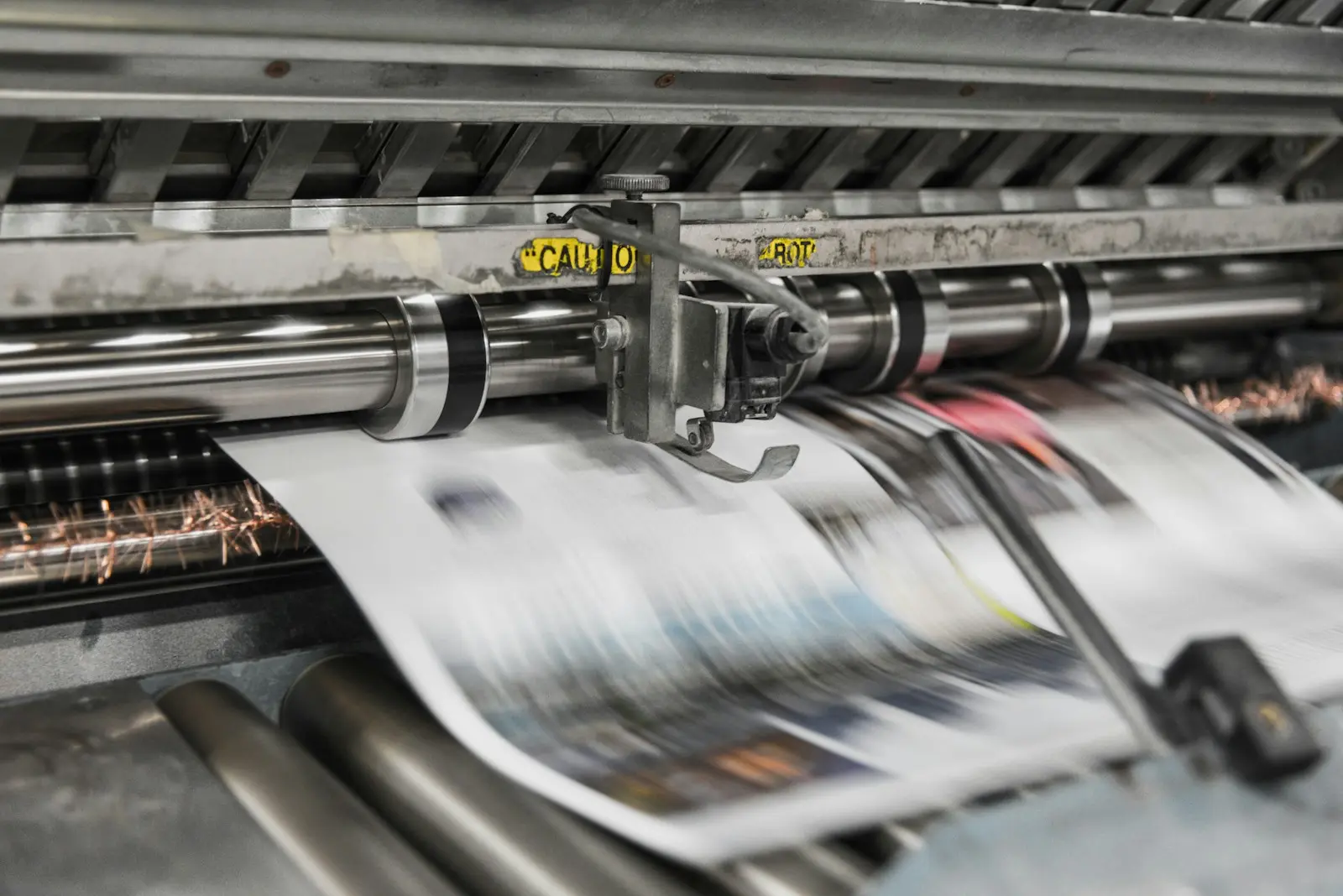
A press or paper machine is a synchronisation problem before it is a control problem. We engineer the drive coordination, tension zones and registration control that keep a web running at speed without breaks, and instrument the line so waste is attributable rather than annualised.
Every engagement starts the same way: we walk the floor, read the existing drawings, and write down what is actually installed before anyone proposes a platform. The sector decides the priorities — the plant decides the design.
Constraints we engineer around
What we bring
Disciplines we lead with in printing & paper
The same engineering team carries the work from the panel to the dashboard, so nothing is lost at a handover between vendors.
In detail
What shapes the work here
The constraints that decide how a system for this sector gets engineered.
Tension zones, not a tension setpoint
A web behaves differently through unwind, process and rewind, and treating it as one controlled quantity is how lines end up with breaks nobody can attribute. Each zone is closed on its own measurement and coordinated with its neighbours.
Getting this right removes a category of intermittent breaks that otherwise gets blamed on material quality.
Registration at speed
Registration error is mostly a dynamics problem: the correction has to arrive faster than the disturbance repeats. That puts the requirement on the drive and feedback resolution long before it lands on the control algorithm.
We size that chain to the line's real speed and the tolerance the product actually needs, which is often tighter in the specification than in practice.
Where the waste actually goes
Most sites know their annual waste figure and not its distribution. Recording it by job, shift, substrate and reason turns makeready from an accepted cost into something that can be worked on.
The instrumentation for it is modest — counters, a break log with causes, and job context from the scheduling system.
Typical scope
What we are brought in to do
- Multi-drive synchronisation across unwind, process and rewind
- Closed-loop tension control by zone
- Registration and colour-to-colour correction
- Web break detection with cause logging
- Makeready and waste reporting by job and substrate
Engineering constraints
- Tension
- Zoned and independently closed
- Dynamics
- Correction faster than disturbance
- Waste
- Attributed by job, not annualised
Common questions
- Can you retrofit tension control to an older press?
- Usually. The deciding factor is whether the drives can accept the command rate needed; where they cannot, the drive upgrade comes first and we say so before quoting the control.
- Will this reduce our web breaks?
- It reduces the ones caused by tension and synchronisation, which in our experience is a large share. It does not fix breaks caused by material defects, and the logging makes that distinction visible.
- Do you work on paper machines as well as presses?
- Yes. The engineering problem — coordinated drives and controlled tension across a continuous web — is the same one at a different scale.
Elsewhere