Plastics & Rubber
Injection, extrusion and moulding control with process data tied to every shot.
- Scope
- Ground to Cloud
- Approach
- Retrofit first
- Base
- Bangalore, India
The brief
What this sector asks of a control system
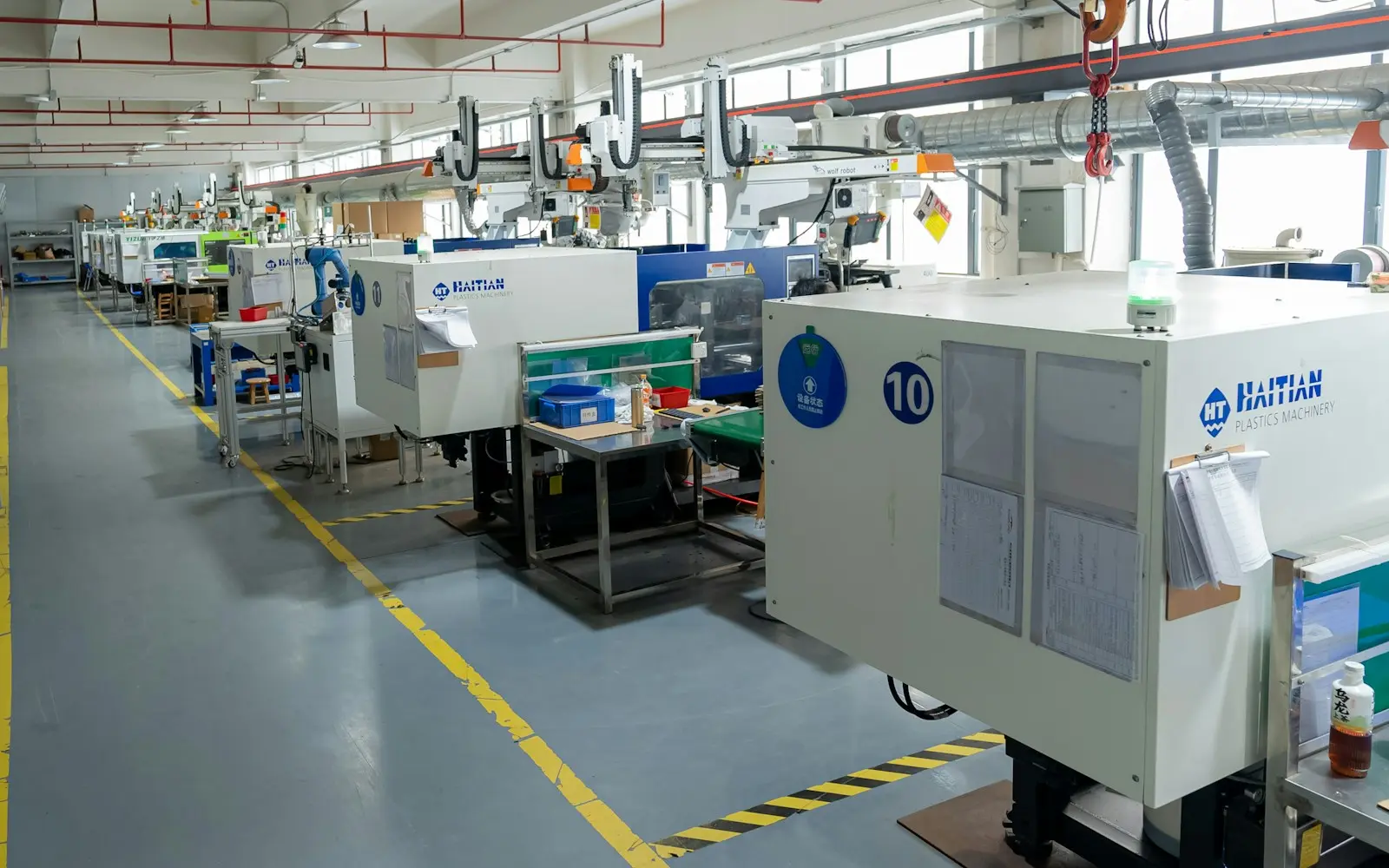
Moulding and extrusion are process industries running at discrete-part rates. We integrate machine control, auxiliaries and material handling, and capture the process conditions behind each shot — so a quality question has a temperature and pressure record attached rather than an opinion.
Every engagement starts the same way: we walk the floor, read the existing drawings, and write down what is actually installed before anyone proposes a platform. The sector decides the priorities — the plant decides the design.
Constraints we engineer around
What we bring
Disciplines we lead with in plastics & rubber
The same engineering team carries the work from the panel to the dashboard, so nothing is lost at a handover between vendors.
In detail
What shapes the work here
The constraints that decide how a system for this sector gets engineered.
The record behind the part
Two parts from the same tool can differ because the melt temperature drifted or the hold pressure changed. Without a per-shot record, that investigation becomes guesswork and usually ends by adjusting a setpoint until the symptom disappears.
Capturing conditions per cycle costs little and converts quality arguments into data ones.
Auxiliaries are part of the process
Dryers, chillers, temperature controllers and material conveying determine outcomes as much as the machine does, yet they are frequently uninstrumented and manually set.
Bringing them into the same control and data layer explains a large share of the variation that otherwise looks random at the press.
Mould change as a planned event
Tool changes are frequent and their duration is highly variable between operators. Recipe recall, guided setup and automatic verification of the loaded tool compress that variation.
It also prevents the expensive failure mode of running a correct cycle against the wrong tool parameters.
Typical scope
What we are brought in to do
- Injection and extrusion machine integration with per-shot data
- Auxiliary control for dryers, chillers and temperature units
- Recipe recall and tool verification at mould change
- Scrap, regrind and material consumption tracking
- Process trend and drift alerting per tool
Engineering constraints
- Process record
- Conditions captured per cycle
- Auxiliaries
- Instrumented, not manually set
- Changeover
- Tool verified against recipe
Common questions
- Can you get data out of our existing moulding machines?
- Usually yes, via the machine's own interface where one exists, or by instrumenting externally where it does not. We check machine by machine rather than assuming a fleet answer.
- Is per-shot data too much to store?
- No — it is modest by modern standards, and it is the dataset that makes quality investigations quick. We size the retention with you.
- Will this reduce scrap?
- It makes the causes visible, which is the prerequisite. The reduction comes from acting on what it shows, and the first finds are usually auxiliaries and drift rather than the press itself.
Elsewhere