Water & Wastewater Treatment
Distributed plant control, remote telemetry and compliance reporting.
- Scope
- Ground to Cloud
- Approach
- Retrofit first
- Base
- Bangalore, India
The brief
What this sector asks of a control system
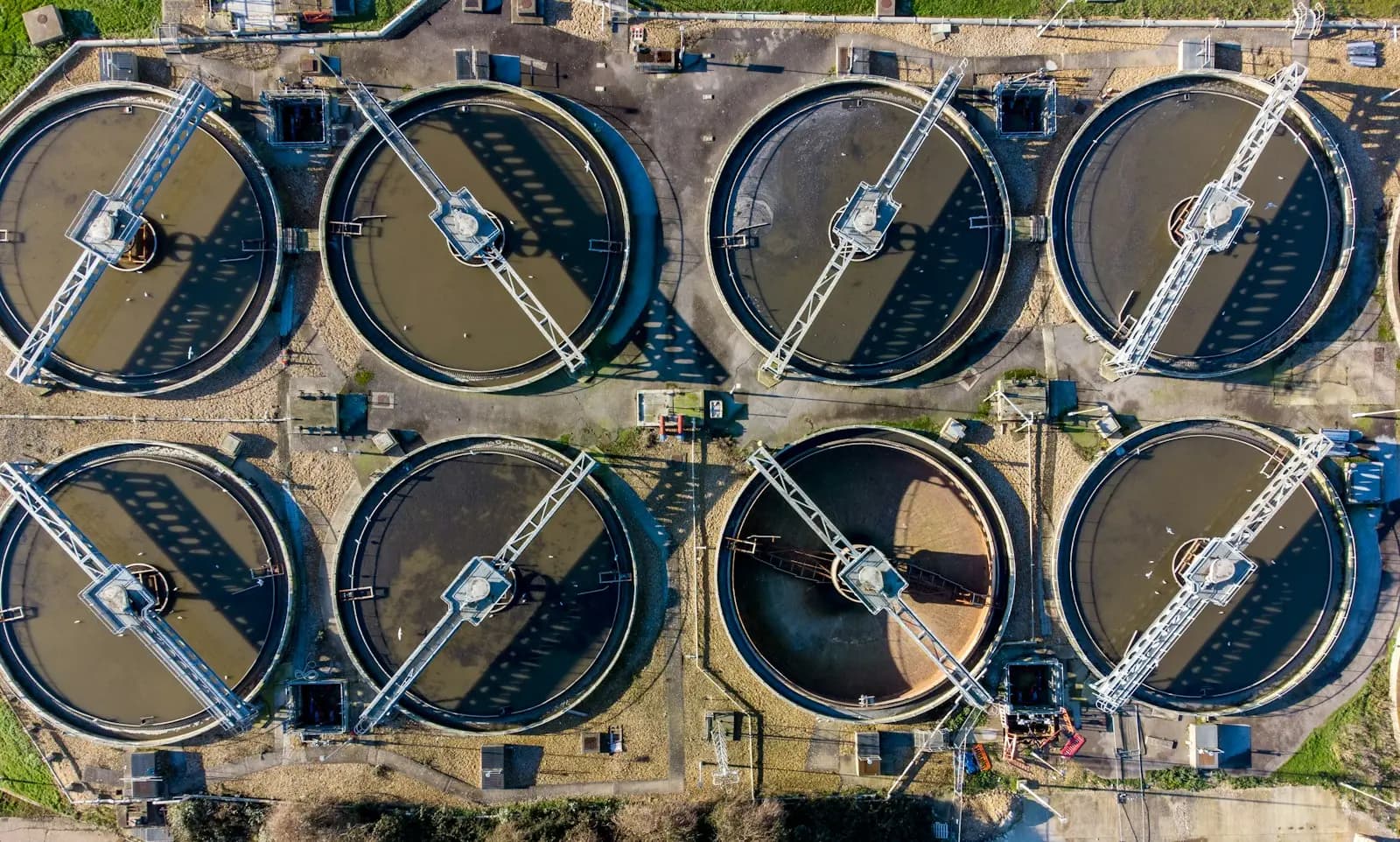
Treatment plants run continuously, across sites, often with nobody on shift. We engineer the control and telemetry that keeps distributed assets supervised from one place, with alarm handling designed for a small team and compliance reporting that comes out of the system rather than out of a spreadsheet.
Every engagement starts the same way: we walk the floor, read the existing drawings, and write down what is actually installed before anyone proposes a platform. The sector decides the priorities — the plant decides the design.
Constraints we engineer around
What we bring
Disciplines we lead with in water & wastewater treatment
The same engineering team carries the work from the panel to the dashboard, so nothing is lost at a handover between vendors.
In detail
What shapes the work here
The constraints that decide how a system for this sector gets engineered.
Designed for nobody being there
Remote pumping stations and outstations are visited, not staffed. Control has to ride out a communications outage, keep operating safely on local logic, and reconcile its data when the link returns.
Systems that depend on a live connection to make decisions strand assets every time the network has a bad night.
Alarms a small team can actually work
A plant that raises hundreds of alarms a shift has effectively no alarm system. Rationalisation — priority, suppression of consequential alarms, and clear operator action for each — is what makes out-of-hours response workable.
This is unglamorous work and it is usually the highest-value thing we do on an existing plant.
Compliance evidence as a by-product
Consent reporting is built from data the plant already produces. When the records are captured with the right timestamps and retention from the start, the report is generated; when they are not, it is reconstructed monthly by hand.
We design the data model against the reporting obligation rather than fitting the report to whatever was logged.
Typical scope
What we are brought in to do
- PLC and SCADA control across treatment stages
- Remote outstation telemetry with store-and-forward
- Pump station and dosing control with duty rotation
- Alarm rationalisation and out-of-hours escalation
- Consent and compliance reporting from plant data
Engineering constraints
- Autonomy
- Local control survives comms loss
- Alarms
- Rationalised for a small team
- Reporting
- Generated, not reconstructed
Common questions
- Can you connect sites that only have mobile coverage?
- Yes, with store-and-forward at the outstation so a gap in coverage costs you data continuity rather than control. We design for the coverage you actually have.
- Our operators ignore the alarm list — can that be fixed?
- It can, and the fix is rationalisation rather than a new screen. Reducing an alarm flood to a workable list is a defined piece of work with a clear result.
- Will the reports satisfy our regulator?
- They will contain the data your consent requires, with the timestamps and retention to support it. The regulatory relationship stays yours, and we build to what your compliance team specifies.
Elsewhere