HVAC & Chiller Systems
Plant-room control and sequencing that cuts energy without losing the setpoint.
- Scope
- Ground to Cloud
- Approach
- Retrofit first
- Base
- Bangalore, India
The brief
What this sector asks of a control system
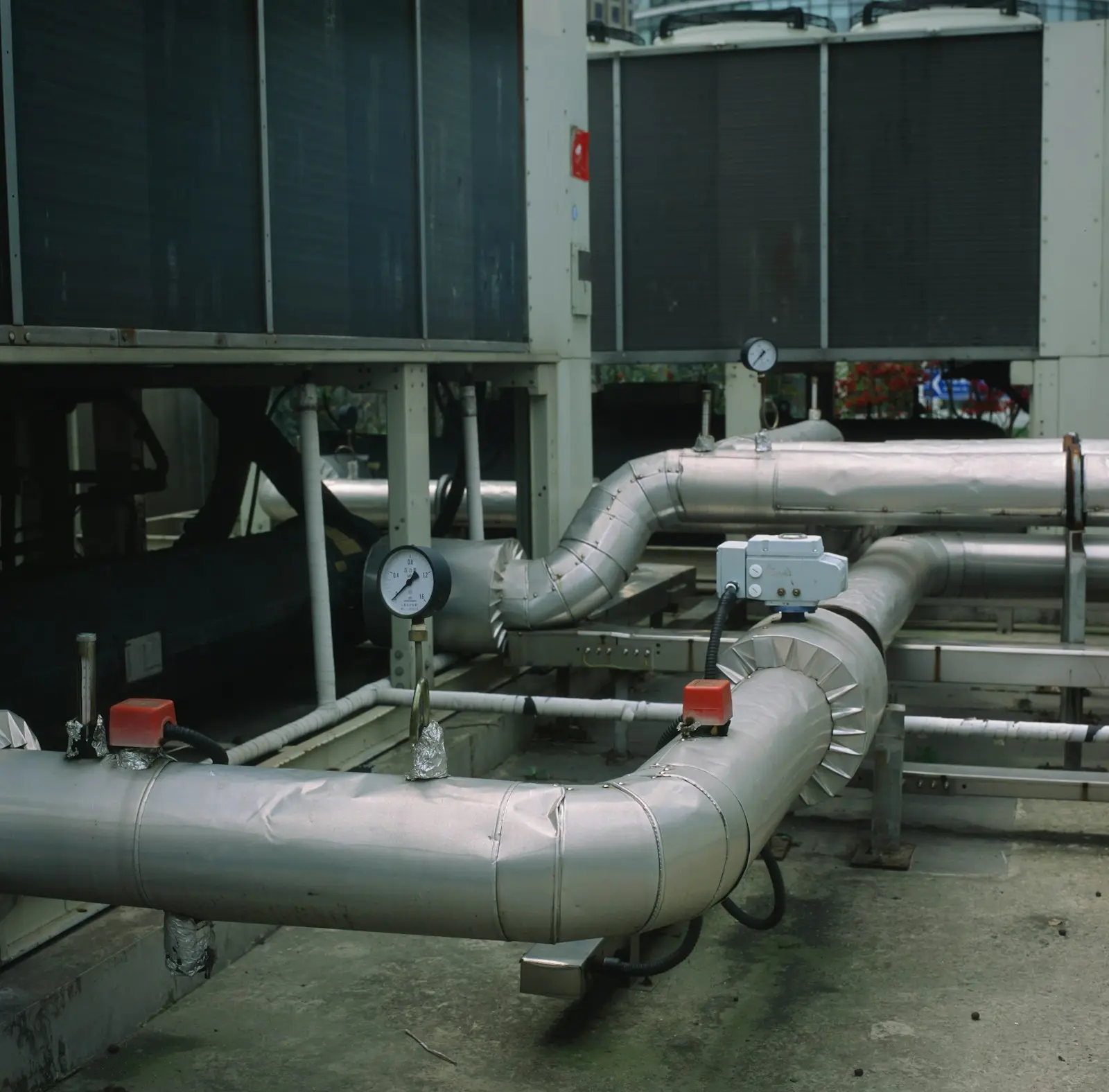
Chiller plants and air handling are among the largest controllable loads on most sites, and among the least optimised. We engineer sequencing, staging and setpoint strategy with metering underneath it, so the plant delivers the condition the process needs at the lowest energy that satisfies it.
Every engagement starts the same way: we walk the floor, read the existing drawings, and write down what is actually installed before anyone proposes a platform. The sector decides the priorities — the plant decides the design.
Constraints we engineer around
What we bring
Disciplines we lead with in hvac & chiller systems
The same engineering team carries the work from the panel to the dashboard, so nothing is lost at a handover between vendors.
In detail
What shapes the work here
The constraints that decide how a system for this sector gets engineered.
Most plant runs at part load
Chiller plants are sized for a design day that occurs rarely and then spend the year at part load, where sequencing decides efficiency far more than equipment selection does.
Staging strategy, condenser water reset and pump control are where the savings are, and they are control changes rather than capital ones.
Setpoints drift and nobody notices
Over years, setpoints get nudged to solve a complaint and never returned. A plant can end up running several degrees tighter than any process requires, at significant cost, with no record of why.
We baseline the current settings, record what each one is for, and alarm on unexplained change — which is a cheap fix with a fast return.
Working with the controllers already there
Plant rooms accumulate controllers from different decades and vendors. Replacing all of them is rarely justified; getting them onto a common supervisory layer usually is.
We integrate what can be integrated and are honest about which units are too closed or too old to be worth keeping.
Typical scope
What we are brought in to do
- Chiller staging and sequencing strategy
- Condenser water and chilled water reset control
- Variable-speed pump and fan control
- Sub-metering of plant-room energy against cooling delivered
- Supervisory integration of mixed legacy controllers
Engineering constraints
- Part load
- Sequencing drives real efficiency
- Setpoints
- Baselined and change-alarmed
- Legacy
- Integrated where worthwhile
Common questions
- Can you improve efficiency without new equipment?
- Often substantially, because sequencing and setpoint strategy are usually where the loss is. We measure before promising a figure.
- Will process cooling be at risk?
- No. The process requirement is the constraint the strategy is designed around; energy is optimised inside it, never against it.
- Do you work on comfort HVAC as well as process cooling?
- Yes, though the economics are usually clearest on process and plant-room loads, which is where we would suggest starting.
Elsewhere