Drives & Motion
Servo and inverter systems tuned for the torque, speed and precision the process needs.
Detail sheet
How we build it
Every deployment is documented to the last terminal, so your team can own it the day we hand it over.
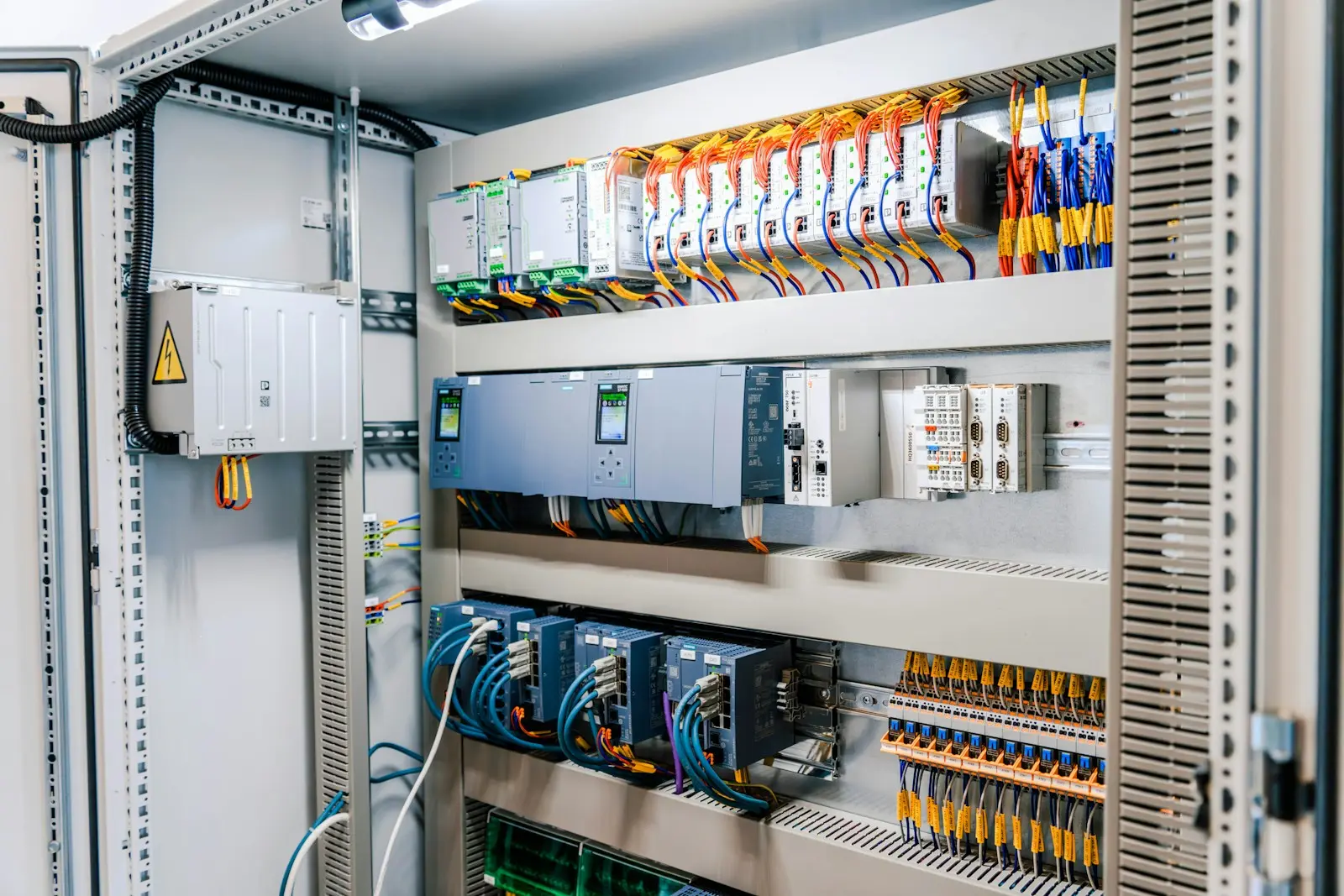
Between the controller and the machine sits the drive. We specify and commission high-performance AC servo systems and variable frequency inverters — sizing them to the real load rather than the nameplate, tuning the loops on the actual mechanics, and setting up the parameter sets so a replacement drive can be swapped in without a specialist. Where the mechanics themselves are the constraint, we work alongside specialists in servo-hydraulics and complex mechanical integration.
- Servo
- Multi-axis AC servo, absolute feedback
- Inverters
- VFD with vector and sensorless control
- Handover
- Parameter sets, tuning record, spares list
In detail
What you should know
How this building block behaves in a working plant, and where it fits.
Sizing against the real load
Drives are usually specified from a motor nameplate and a catalogue table, which is how a machine ends up either straining at peak or running an oversized inverter at a fraction of its rating. We size from the duty cycle: peak torque, acceleration profile, reflected inertia, and how often the axis reverses.
Inertia ratio is the number that decides whether an axis will ever tune well. Getting it wrong is a mechanical problem that no amount of gain adjustment later will solve.
Tuning on the machine, not the bench
Auto-tune gets an axis moving. It does not get it moving well under a changing load, with a long belt, or with the compliance that real mechanics have. Final tuning happens on the assembled machine, with the process running, and the resulting gains are written down.
We record the tuning so it can be reproduced. An axis retuned by feel every time a drive is replaced is an axis whose behaviour drifts year on year.
Energy, and where inverters actually save it
Fitting a VFD to a fan or pump that spends its life throttled is one of the few changes on a plant that pays back quickly and predictably. Fitting one to a fixed-speed conveyor that already runs at full load saves nothing and adds a failure point.
We say which of your loads are in the first category before quoting the second.
Applied
Where it earns its place
- Multi-axis machines needing synchronised, repeatable motion
- Replacing drives that are end-of-life or no longer stocked
- Converting throttled fans and pumps to variable speed
- Diagnosing axes that overshoot, hunt or trip on load
- Retrofitting servo control onto mechanically cammed machines
What ships with it
- Drive sizing calculation against the actual duty cycle
- Commissioned parameter sets, backed up and documented
- Tuning record with final gain values
- Wiring and shielding detail for the drive cabinet
- Recommended spares and replacement procedure
Common questions
- Servo or inverter for our application?
- If the axis has to hit a position or hold a torque accurately, servo. If it just has to turn at a controllable speed, an inverter is cheaper, simpler and easier to maintain. Plenty of machines carry servos on axes that never needed them.
- Can you retune an existing machine?
- Usually. If the mechanics have worn or the inertia ratio was wrong from the start, tuning will only get you so far — we will tell you which of the two you have.
- Do you handle servo-hydraulics?
- We work with specialists on it rather than claiming it in house. On presses and heavy-tonnage machines that combination of expertise matters more than any single supplier's catalogue.
Elsewhere in the stack
Other solutions
The layers above and below this one — most projects use three or four together.